Immediate risk
Loose tiles, open roof sections, falling debris and fast water entry are the first issues to address on an emergency visit.
Some roof problems in East Ham cannot wait for a routine visit, especially if tiles are loose above the street, a rear extension roof has opened up, or rain is entering quickly through flashing, felt or a damaged valley detail.
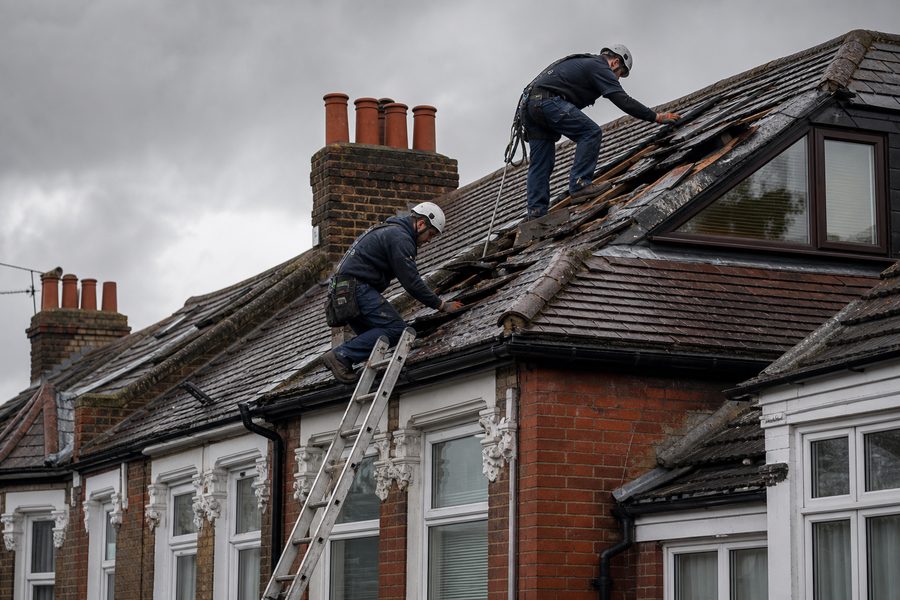
Emergency work is about making the roof safe first, limiting water entry and then deciding what full repair is needed.
Loose tiles, open roof sections, falling debris and fast water entry are the first issues to address on an emergency visit.
Roofers need to see how exposed the failed area is and if more rain or wind is likely to push the damage further before a full repair is completed.
On East Ham streets, the first visit may stabilise the roof while a larger follow-up repair is arranged if access is awkward or more materials are needed.
Emergency roof repair usually means one of three things in East Ham. First, part of the roof has become unsafe, such as loose tiles, damaged ridges or material that could fall into a front path or rear yard. Second, water is entering quickly enough to threaten ceilings, electrics or belongings. Third, a roof junction has opened in a way that leaves the house exposed to more damage if the weather turns again.
Compact terraced streets make some of these problems more urgent than they might be on a detached house. A loose tile above a pavement edge or a narrow shared access route is not only a leak risk. It can also be a safety issue for neighbours and passers-by.
Strong gusts can lift already weakened ridge tiles, push rain under broken flashing or expose underlay where a tile line has shifted. Heavy rain can also turn a marginal flat roof edge into an active internal leak very quickly, especially above a back room where water has nowhere good to drain. Bay roofs and rear additions are common trouble spots because they are shallow, exposed and often already old.
Storm damage is not the only reason to seek urgent help. Some calls happen after a homeowner suddenly notices water pouring down a chimney breast, a ceiling bowing under trapped moisture or a section of felt peeling back from the edge of an extension roof.
The first aim is to make the situation safe and stop it getting worse. That may involve securing loose materials, replacing a small number of failed tiles, covering an exposed section temporarily or putting a quick weatherproof repair in place on a small roof area. If the job needs scaffolding or a wider strip and repair, that may come next rather than on the very first visit.
That is normal. Emergency roofing is often a two stage process: immediate protection, then the fuller repair once safe access and the right materials are in place. A clear quote should explain which part is being done now and which part follows after.
If you heard tiles fall, saw part of a ridge move, noticed water entering around a stack or found the leak straight after a storm, say so when requesting quotes. On East Ham properties, it also helps to explain if the failed area is above the front street side, a rear addition, a dormer or a garage, because the access picture changes a lot between those spots.
If any ceiling looks unsafe or electrics are close to the leak, say that clearly as part of the emergency description. It helps roofers judge urgency from the start instead of treating it as a normal routine enquiry.
Describe what changed, when it happened, which part of the roof is affected and if any material looks loose from ground level. Do not climb up to inspect it yourself.
Get a QuoteUrgent roofing responses vary with the weather, the amount of roof affected and how easy the failed area is to reach.
A roofer may secure loose tiles, replace a damaged local section, install temporary weather protection, make safe a ridge or verge, or carry out a quick repair to a flashing or flat roof edge that is letting in heavy water. The priority is reducing immediate risk.
On East Ham terraces, front roof emergencies can involve safety concerns because of the pavement below. Rear roof emergencies can be more awkward because the damaged section may sit over an extension or behind several roof lines.
If the first visit is during ongoing poor weather, the roofer may do enough to stop the house getting wetter, then return for permanent work once conditions improve. That is often the safest route rather than forcing a bigger repair in bad conditions.
Where a valley gutter between a main roof and rear addition has failed, the emergency step may focus on stemming the water path before the whole junction is rebuilt properly.
Flat roof emergencies on bays or porches often involve edge failure and wind lift. Those roofs are small, but once the edge opens they can admit a surprising amount of water quickly.
If debris has fallen into the garden, if a neighbour has also noticed movement, or if there is evidence of more than one loose section, tell the roofer. That can indicate wider instability rather than one isolated defect.
Emergency work can also include checking internal risks. Water around ceiling lights, consumer units or loft electrics should always be treated with extra care.
A good urgent quote will make clear what has been made safe, what still needs follow-up work and if access equipment will be needed for the permanent repair.
That clarity matters because the immediate goal is control and safety, not pretending the first short visit has solved every underlying roof issue.
Urgent call-outs often lead into leaking roof investigation, tile repair or flat roof edge work once the roof is stabilised.
Loose materials, fast active leaks, exposed roof sections and damage that threatens safety or major internal wetting all count as urgent.
Not always. The first job may be to make the roof safe and weather resistant before permanent work is scheduled.
No. It is safer to observe from the ground and describe what you can see when requesting quotes.
If your East Ham roof has sudden storm damage or a fast leak, you can compare free quotes from local roofers for urgent repair work.
Get a Quote