Where the water enters
The source may be a tile, slate, flashing detail, valley gutter, parapet line or flat roof edge several feet away from the room where the stain appears.
A leaking roof in East Ham often points to a hidden weakness on a terrace or converted house, such as a valley gutter fault, cracked flashing, slipped tile, blocked parapet channel or split felt over a rear room.
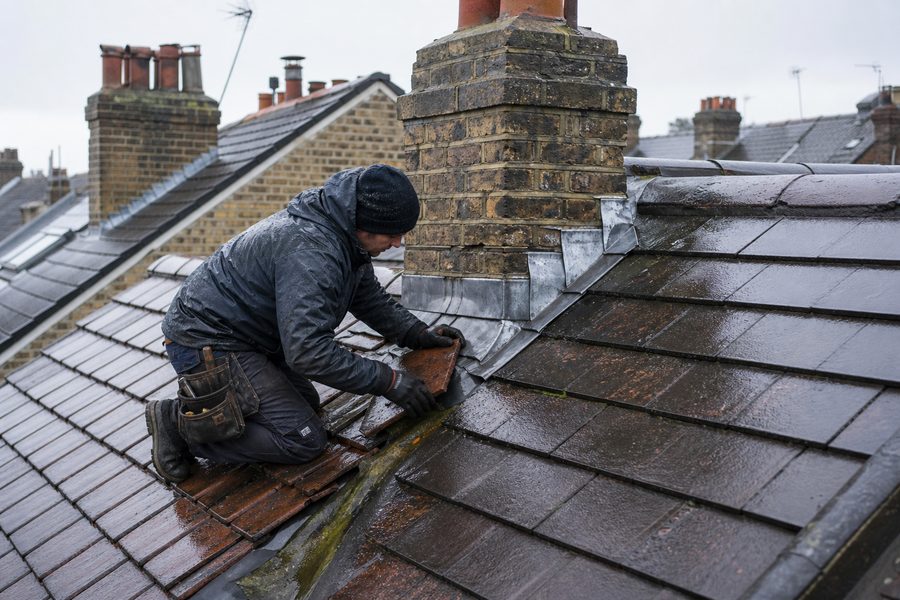
Tracing a roof leak is about following the route of the water, not just looking at the damp patch indoors.
The source may be a tile, slate, flashing detail, valley gutter, parapet line or flat roof edge several feet away from the room where the stain appears.
Roofers want to know if it shows in heavy rain, windy weather, long wet spells or all of them, because that pattern can narrow the cause down quickly.
Lofts, party walls, chimney breasts, rear rooms and bay ceilings all give clues about the route the water is taking through the structure.
Leaking roof repair in East Ham is often more about careful investigation than dramatic visible damage. Many houses are older terraces with rear additions, parapets, chimneys and roof junctions that have been altered over decades. By the time water shows on a bedroom ceiling or above a kitchen doorway, it may have travelled a long way from the original entry point.
That is especially true on houses with back additions. Rain can get into a valley gutter where the addition meets the main roof, then track down timber or masonry before it appears indoors. A homeowner standing in the room below may assume the problem sits directly overhead when the failed detail is actually several courses higher up.
On terraced streets, roofers often trace leaks to slipped or broken tiles, ageing slate repairs, flashing at chimney stacks, parapet gutters, rear flat roof edges and blocked rainwater outlets. Bay roofs and dormers are also common trouble spots because they are small, exposed and easy to ignore until a stain appears.
Converted houses add another complication. Where lofts have been altered, ceilings lowered or rooms subdivided, the visible sign of the leak may not line up with the external defect in a simple way. Water can follow hidden voids and land on a ceiling that is nowhere near the point of entry outside.
A damp patch that grows after each spell of rain, bubbling paint, a musty loft smell, discoloured wallpaper near a party wall or moisture around a chimney breast are all signs worth taking seriously. Once insulation and timber stay damp for long periods, the repair stops being only about the roof surface. The internal damage begins to add cost.
On East Ham properties with narrow side access and close neighbouring buildings, people often put off arranging a visit because they assume the job will be awkward. In practice, the awkwardness is another reason not to leave it too long. A small leak in a hard to reach rear section can be the one that causes the most hidden damage.
If the leak appears only in driving rain, that can point towards flashing, parapet edges or water being pushed under a weak tile line. If it shows after many hours of steady rain, the cause may be a slow ingress point or a flat roof section that only fails once water has had time to build up. That detail helps roofers decide where to look first.
Even the room affected can give clues. Water over the front bay suggests a different set of likely causes from water over a rear kitchen addition or a damp patch beside the stack in the loft. The more precise the description, the better the first round of quotes tends to be.
Say when the leak appears, which room is affected, if the roof is terraced or converted, and if the trouble seems to involve a rear addition, bay, chimney or parapet edge.
Get a QuoteThe repair may be simple once the true source is found, but getting to that source is the part that needs care on older East Ham housing.
A roofer may replace slipped or broken tiles, renew flashing around a chimney or wall line, clear and repair a parapet or valley gutter, patch a flat roof edge, or secure a weak ridge detail that has been admitting water. The exact job depends on where the leak starts and how long it has been active.
On East Ham terraces, one of the first tasks is often separating a true roof leak from gutter overflow. Water running back from a blocked outlet can create staining that looks like a failure in the roof covering itself.
If the leak sits over a rear addition, the roofer may need to inspect both the small flat roof and the main slope above it. Water dropping from a higher defect can make the lower roof look guilty when it is not the real cause.
Loft inspection can also matter. Damp felt, stained battens, wet party walls or daylight at a tile line can all help pin the fault down faster.
If the ceiling below is already sagging, if electrics are close to the wet area, or if the leak is running down a chimney breast, mention that at the quote stage. Those details affect urgency and safety.
Some East Ham leaks are made worse by old patching compounds and heavy sealants that have trapped water or diverted it into another weak point. A roofer may need to strip those back before the real repair can be done properly.
On converted properties, it is useful to mention if the top floor is a loft room or flat conversion. Hidden voids and access limitations can change the inspection route.
A leak does not have to be dramatic to justify repair. Slow water entry over several months can do more to plaster and timbers than one short burst of obvious dripping.
The aim is to stop the water at the correct source and reduce the chance of repeat call-outs each time East Ham gets another spell of wet weather.
Leaks often overlap with flashing faults, tile movement, flat roof wear and urgent call-outs after bad weather.
Water often travels along timbers, felt and masonry before it drops through to the ceiling.
Yes. Overflowing gutters and failed outlets can send water back under roof edges and across wall heads.
Yes. A slow leak can soak insulation and damage timber for months before it becomes obvious.
If your East Ham roof is letting water in, you can compare free quotes from local roofers for leak tracing and repair work.
Get a Quote